Ваш кошик
Ви нічого не додали до кошика
Перейти до категорії:

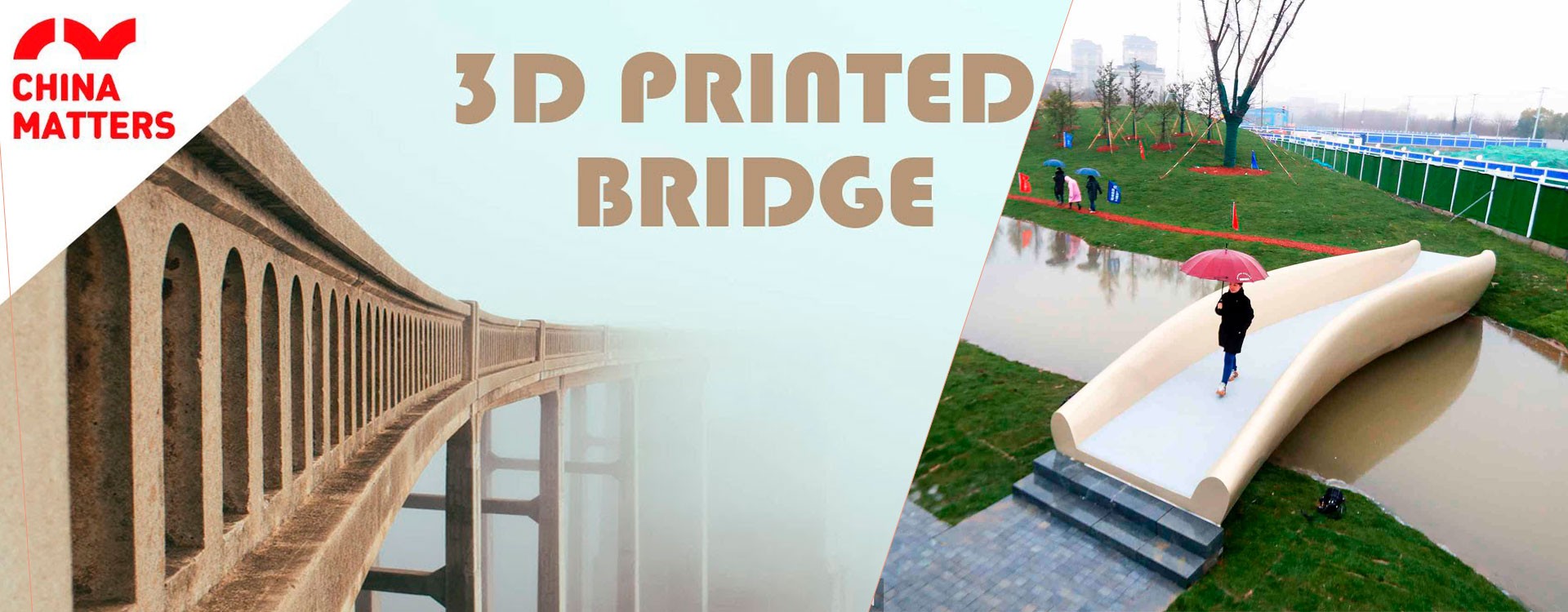
Технології 3D-друку продовжують розширювати межі можливого, переходячи від створення невеликих прототипів і сувенірів до реалізації масштабних інженерних проєктів. Одним із яскравих прикладів став перший у Китаї пішохідний міст, повністю надрукований на 3D-принтері, представлений у Шанхаї на початку 2019 року. Цей проєкт не лише продемонстрував потенціал адитивних технологій у будівництві, а й став важливим кроком на шляху до їхнього ширшого впровадження.
Ще кілька років тому ідея надрукувати цілий міст здавалася фантастикою. Сьогодні ж, завдяки розвитку 3D-принтерів та спеціалізованих матеріалів, це стало реальністю. Розгляньмо докладніше цей унікальний проєкт та його значення для індустрії.
У січні 2019 року в шанхайському районі Путуо, на території інноваційного комплексу Taopu Smart City, було урочисто відкрито 15-метровий пішохідний міст. Елегантна конструкція, перекинута через мальовниче озеро в парку, стала першою подібною спорудою в Китаї, створеною за допомогою адитивних технологій.
Міст завширшки 3,8 метра та завглибшки 1,2 метра важить значні 5800 кг. Попри уявну легкість, він спроєктований так, щоб витримувати навантаження до 250 кг на квадратний метр, що еквівалентно вазі приблизно чотирьох дорослих людей. Цей запас міцності гарантує безпеку пішоходів і довговічність конструкції.
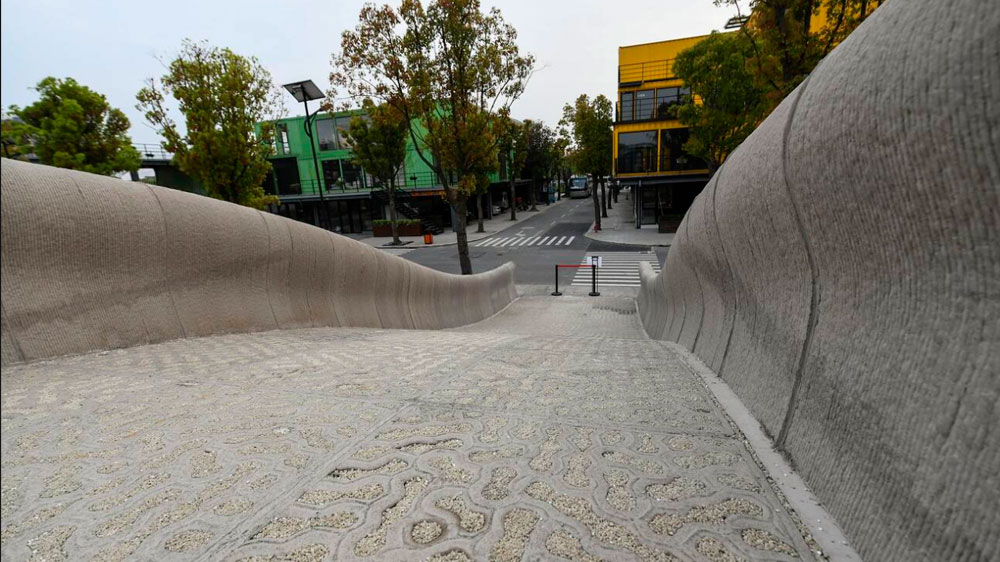
Проєкт став результатом співпраці кількох компаній: Shanghai Machinery Construction Group відповідала за створення гігантського 3D-принтера, Coin Robotic розробила систему екструдерів, а компанія Polymaker надала та адаптувала матеріали для друку.
«Багато людей ніколи не торкалися об'єкта, надрукованого на 3D-принтері, і все ще вважають його частково фантастикою, частково технологією майбутнього», – зазначили представники Polymaker. «Подібні проєкти приносять багато користі з погляду ознайомлення громадськості з реальністю та можливостями 3D-друку».
Цей міст – не просто інженерна споруда, а інтерактивний об'єкт, що дозволяє людям буквально доторкнутися до технологій майбутнього.
Створенню мосту передувала серйозна підготовча робота. Команда інженерів витратила півтора року на дослідження, розробку та планування, перш ніж розпочати безпосередньо друк.
Спеціально для цього проєкту було побудовано, за словами розробників, «найбільший у світі пластиковий 3D-принтер». Інвестиції у створення цього унікального обладнання склали близько 2,8 мільйона доларів США. Друк самого мосту зайняв 450 годин безперервної роботи.
Цей приклад наочно демонструє, що технології 3D-друку масштабуються для вирішення найамбітніших завдань, хоча й вимагають значних початкових вкладень в обладнання.
Ключовим фактором успіху стала розробка відповідного матеріалу. Компанія Polymaker надала для будівництва модифікований пластик ASA (акрилонітрилстиролакрилат), армований скловолокном.
Вибір ASA був невипадковим. Цей матеріал відомий своєю:
Додавання скловолокна вирішило одразу кілька завдань:
Завдяки такому поєднанню матеріалів, інженери прогнозують термін служби мосту близько 30 років. Це доводить, що правильно підібрані філаменти для 3D-принтера можуть конкурувати за довговічністю з традиційними будівельними матеріалами.
Шанхайський міст – це не просто технологічне досягнення, а й важливий сигнал для всієї будівельної галузі. Уряд Шанхаю назвав проєкт «інноваційним способом просування технології 3D-друку та її популяризації в міському будівництві».
3D-друк пропонує низку потенційних переваг порівняно з традиційними методами будівництва:
Попри очевидні плюси, широкому впровадженню 3D-друку в будівництво поки що заважають деякі фактори:
Проте, перспективи 3D-друку в будівництві величезні. У міру розвитку технологій та зниження їхньої вартості, ми, ймовірно, побачимо все більше мостів, будинків та інших споруд, створених за допомогою адитивних методів.
Варто зазначити, що шанхайський міст, хоч і перший у Китаї, не був першим 3D-друкованим мостом у світі. Піонером став пішохідний міст, надрукований з бетону в Мадриді ще 2016 року. З того часу технологія зробила великий крок уперед.
Сьогодні компанії по всьому світу експериментують із 3D-друком не лише мостів, а й цілих будівель. З'являються проєкти житлових будинків, офісних приміщень і навіть елементів міської інфраструктури, створених за допомогою будівельних 3D-принтерів. Цей напрям активно розвивається, особливо в контексті пошуку швидких і доступних рішень для житлового будівництва.
Вивчення застосування 3D-принтерів в архітектурі показує, наскільки гнучкою та інноваційною може бути ця технологія.
Як показав приклад шанхайського мосту, вибір матеріалу критично важливий для успіху великомасштабного 3D-друку. Крім ASA, армованого скловолокном, для будівельних та інженерних завдань використовуються й інші матеріали:
Вибір конкретного матеріалу залежить від вимог проєкту: навантаження, умов експлуатації, бюджету та доступного обладнання. У магазині 3D4U ви знайдете широкий асортимент пластиків для 3D-друку, включно з міцними та атмосферостійкими варіантами.
Хоча домашні 3D-принтери не призначені для друку мостів, вивчення властивостей міцних матеріалів, таких як ASA, PETG або інженерні пластики, може бути корисним для створення функціональних деталей, корпусів або вуличних елементів.
Проєкти, подібні до шанхайського мосту, закладають основу для майбутнього, де 3D-друк стане невіддільною частиною будівельної індустрії. Потенціал величезний: від швидкого зведення тимчасових споруд у зонах лиха до створення унікальних архітектурних шедеврів і персоналізованого житла.
Можна очікувати появи нових, ще міцніших та екологічніших матеріалів, а також удосконалення самих принтерів, що зробить їх швидшими, точнішими та доступнішими. Інтеграція 3D-друку з іншими цифровими технологіями, такими як BIM (інформаційне моделювання будівель), дозволить оптимізувати весь процес проєктування та будівництва.
Можливо, в недалекому майбутньому ми побачимо цілі райони, надруковані на 3D-принтерах, з унікальною архітектурою та ефективним використанням ресурсів. Дізнатися більше про потенціал можна у статті про 3D-друк у сільському господарстві, де технологія також знаходить нестандартні застосування.
Перший 3D-друкований пішохідний міст у Китаї став яскравою демонстрацією можливостей сучасних адитивних технологій. Він показав, що 3D-друк здатний вирішувати складні інженерні завдання, створювати довговічні та функціональні конструкції, а також привертати увагу громадськості до інновацій.
Хоча до масового впровадження 3D-друку в будівництво ще належить пройти довгий шлях, долаючи технологічні та нормативні бар'єри, такі проєкти, як шанхайський міст, безсумнівно, прискорюють цей процес. Вони надихають інженерів, архітекторів і дизайнерів на нові звершення та відкривають двері в майбутнє, де будівництво стане швидшим, ефективнішим і креативнішим.
Зацікавилися можливостями 3D-друку? Ознайомтеся з асортиментом сучасних 3D-принтерів та високоякісних матеріалів у каталозі 3D4U та почніть втілювати свої ідеї в реальність вже сьогодні!
 Зелена революція в 3D-друку: як Bambu Lab змінює індустрію
 10 причин, чому швидкість 3D-друку має значення: Переваги високошвидкісних принтерів Bambu Lab
 5 несподіваних застосувань 3D-друку в повсякденному житті
 7 вагомих причин впровадити 3D-принтери в школах
 3D-друк у сільському господарстві: нова ера землеробства.